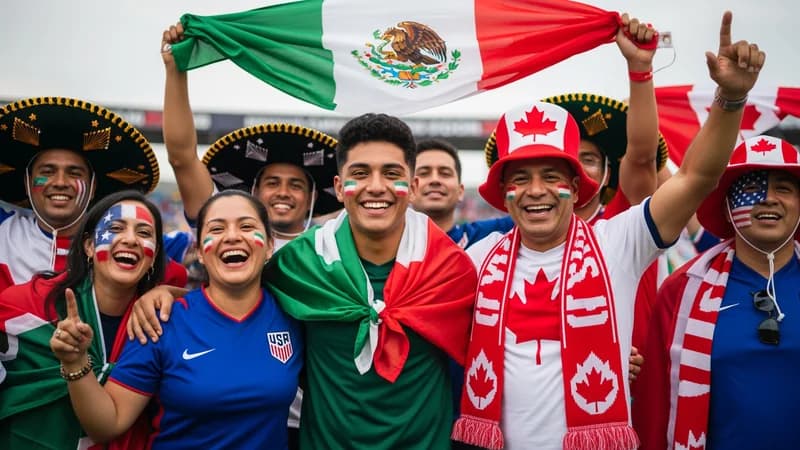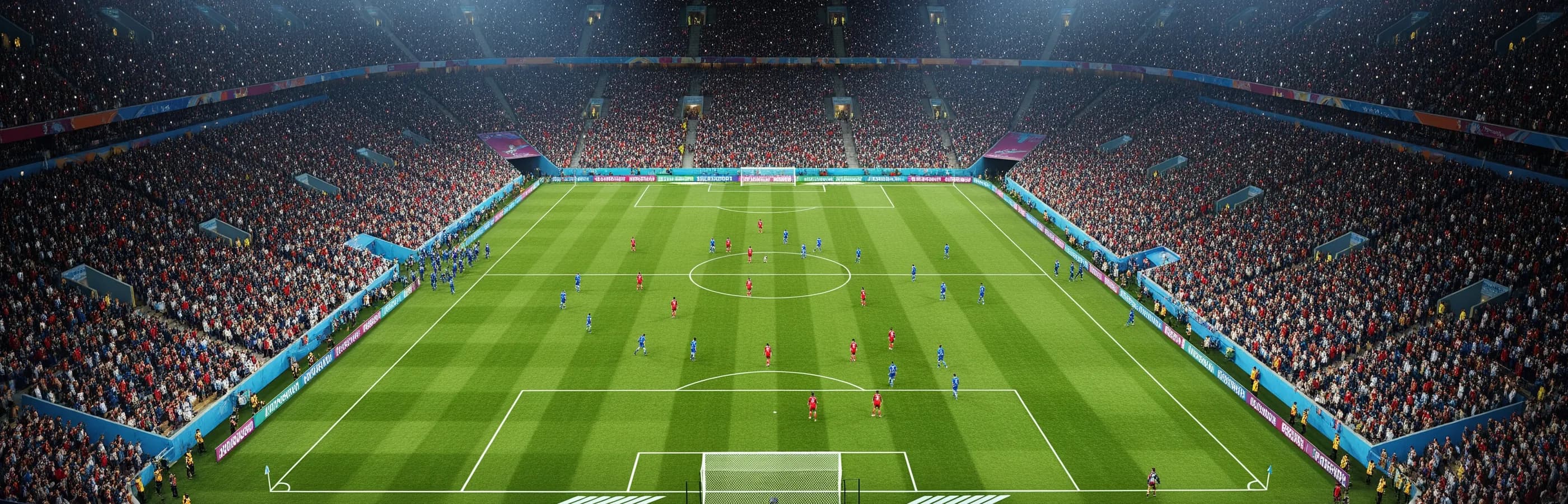
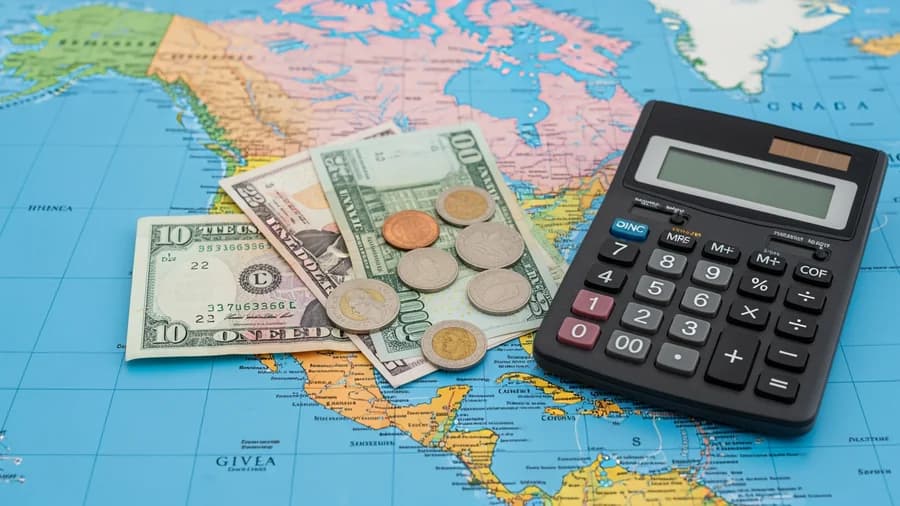
The 2026 World Cup will be the most expensive in tournament history, by some distance. Average ticket prices are 30 percent higher than the 2022 Qatar tournament. Hotel prices in the host cities during the tournament window are 60 to 200 percent above the same week in 2024. Inter-city travel costs are also up 40 to 70 percent. A fan attending one match in person could easily spend USD 1,500 on a single match-day in a major host city.
The good news is that a fan on a tight budget can still attend in person. The cost-per-match floor is closer to USD 350 to USD 500 than the headline USD 1,500, if you are willing to make smart trade-offs. This guide walks through the cost categories one by one and tells you where the savings actually live: the cheapest tickets, the lowest-cost host cities, the accommodation alternatives that work, public transit instead of rideshare, and the costs that are not worth saving on.
Tickets: where the savings are
FIFA, the international governing body for football, sells tickets in four price categories at every match. Category 1 (the most expensive) is the prime sideline lower bowl. Category 4 (the cheapest, only available to residents of the host country) is the upper bowl behind the goal. The price gap between Category 1 and Category 4 at the same match is typically 4-to-1 or 5-to-1.
Group-stage matches between two teams not from the host country (a Brazil versus Croatia group game in Atlanta, for example) are the cheapest entry point. The Category 4 ticket for such a match starts at USD 60. The Category 3 ticket starts at USD 105. By contrast, a Category 1 ticket for the same match is USD 480.
Knockout-round tickets are dramatically more expensive. The Round of 32 (the new first knockout round under the 48-team format, played 27 to 30 June) Category 4 ticket is USD 240. The Final on 19 July at MetLife Stadium has no published Category 4 price (Category 4 is reserved for US residents under FIFA's allocation rules) and the Category 3 ticket is USD 1,250.
The cheapest realistic match for an international fan is a group-stage Category 3 ticket in a small host market. Kansas City, Boston (at Foxborough), Philadelphia and Atlanta all have group-stage Category 3 tickets for around USD 145 for the lowest-demand pairings (typically the third match of a group when one team has already qualified or been eliminated). The cheapest realistic match for a US, Canadian or Mexican resident is a group-stage Category 4 ticket at USD 60 to USD 90.
Host cities: where the costs are lowest
The four cheapest host cities for tournament-window travel costs (combining hotel, food and local transit) are:
- Guadalajara, Mexico: Average tournament-window hotel rate is USD 90 per night for a three-star property. Restaurant meals at MXN 250 to MXN 450 (USD 14 to USD 25). Local transit is MXN 12 (USD 0.70) per ride.
- Monterrey, Mexico: Hotel USD 110 per night. Restaurant meals MXN 280 to MXN 480. Local transit MXN 17 (USD 1) per ride.
- Mexico City: Hotel USD 130 per night for a three-star in central neighbourhoods. Restaurant meals MXN 300 to MXN 550. Metro is MXN 5 (USD 0.30) per ride, the cheapest urban transit at any host city.
- Kansas City: Hotel USD 240 per night during the tournament window. Restaurant meals USD 18 to USD 35. Local transit USD 1.50 per ride. Kansas City is the cheapest US host city by a 30 percent margin.
The four most expensive host cities are New York and New Jersey (because of the MetLife Final and Semi-final hosting), Los Angeles (SoFi Stadium hosts a Semi-final), Toronto (limited hotel inventory), and Vancouver (the Pacific Coast premium). Tournament-window hotel rates in these cities are USD 380 to USD 720 per night for a three-star property. Restaurant meals are USD 30 to USD 60 per person.
Accommodation: alternatives that actually save
The four practical accommodation alternatives to hotels are:
- Hostels: Available in most host cities, typically USD 35 to USD 80 per night for a dormitory bed. The standard is higher in Canada and Mexico than in the United States, where the hostel network is thinner.
- Short-term apartment rentals: Airbnb and Vrbo listings in host cities are USD 150 to USD 350 per night for a private one-bedroom apartment, which works out cheaper than a hotel if four people split the cost.
- Suburb-and-commute: Staying in a suburb 30 to 60 minutes from the host city centre and using public transit or a rental car to get in. Hotel rates in suburbs are 40 to 60 percent below central rates. The trade-off is the commute time and the night-time transit access.
- University housing: Several US universities (UCLA, USC, Columbia, NYU, Texas A&M) are renting summer dormitory rooms during the tournament window for USD 80 to USD 150 per night. The university websites publish the available dates and booking links from January 2026.
The savings from these alternatives are USD 100 to USD 400 per night per person compared to a central-city hotel. Across a 10-day trip following a team through the group stage, the saving is USD 1,000 to USD 4,000 per person.
Public transit instead of rideshare
Match-day rideshare surge pricing in all 16 host cities triples or quadruples the standard fare during the post-match window. A USD 30 standard rideshare from a stadium becomes USD 90 to USD 130 at the post-match peak.
The fix is public transit. Every host city has a transit option that connects to the stadium:
- MetLife Stadium: NJ Transit Meadowlands Rail Line, USD 5.50 round trip from Penn Station Manhattan
- Mercedes-Benz Stadium: MARTA Five Points Station, USD 2.50 one-way
- Lumen Field: Sound Transit Light Rail, USD 3.50 one-way
- Levi's Stadium: VTA Light Rail, USD 4.00 one-way
- SoFi Stadium: Metro K Line then shuttle, USD 1.75 one-way
- Hard Rock Stadium: No direct rail access, BCT bus 297 USD 2.25 one-way
- Lincoln Financial Field: SEPTA Broad Street Line, USD 2.50 one-way
- Estadio Azteca: Mexico City Metro Line 2 to Tasquena, MXN 5 (USD 0.30)
The total transit cost across an entire match-day in any host city is USD 10 or less. The same trip by rideshare during the surge window is USD 100 to USD 200. Across a 10-day trip with eight match-days, the saving is USD 700 to USD 1,500.
Food: the realistic budget
Food costs are the easiest category to control. The pattern across all three host countries is that street food and casual restaurants are 50 to 70 percent cheaper than upscale or stadium-area restaurants.
- Mexico: Street food (tacos, tortas, elotes) is MXN 30 to MXN 90 per item. A meal at a casual restaurant is MXN 200 to MXN 400.
- United States: Fast-casual restaurants (Chipotle, Shake Shack, local equivalents) are USD 12 to USD 18 per meal. Sit-down restaurants are USD 25 to USD 60 per meal. Stadium-area restaurants on a match day add a 30 to 50 percent premium.
- Canada: Fast-casual is CAD 14 to CAD 22. Sit-down is CAD 30 to CAD 70.
The realistic daily food budget for a fan eating one casual meal and one sit-down meal is MXN 700 in Mexico (USD 40), USD 50 in the US, CAD 60 in Canada (USD 44). Drinking water at the stadium is allowed in sealed bottles up to 500ml, so bring water from your hotel rather than paying USD 8 a bottle inside.
What is not worth skimping on
Travel insurance is the cost that is not worth saving on. Trip cancellation insurance for a USD 3,000 World Cup trip costs USD 100 to USD 200. Medical insurance for international travel costs USD 50 to USD 150 for a 10-day trip. The cost of a stadium evacuation, an unplanned medical visit, or a cancelled match without insurance is in the thousands of dollars.
Stadium ticket authentication is the second cost not worth saving on. Tickets resold below face value on unsanctioned platforms have a 12 to 18 percent rate of being denied entry at the gate (FIFA's own published figure from 2018 and 2022 tournament data). Saving USD 50 on a ticket that turns out not to work and leaves you locked outside the stadium is not a saving. Use the FIFA Resale Platform for any second-hand ticket purchase.
Mobile data for the trip is the third. Tourist eSIM plans for the United States, Canada and Mexico cost USD 20 to USD 50 for a 10-day data plan. Operating without local data in a host city during the tournament is impractical: the FIFA Tickets app, the host city transit apps, and the navigation apps you will need all require connectivity. Save somewhere else.