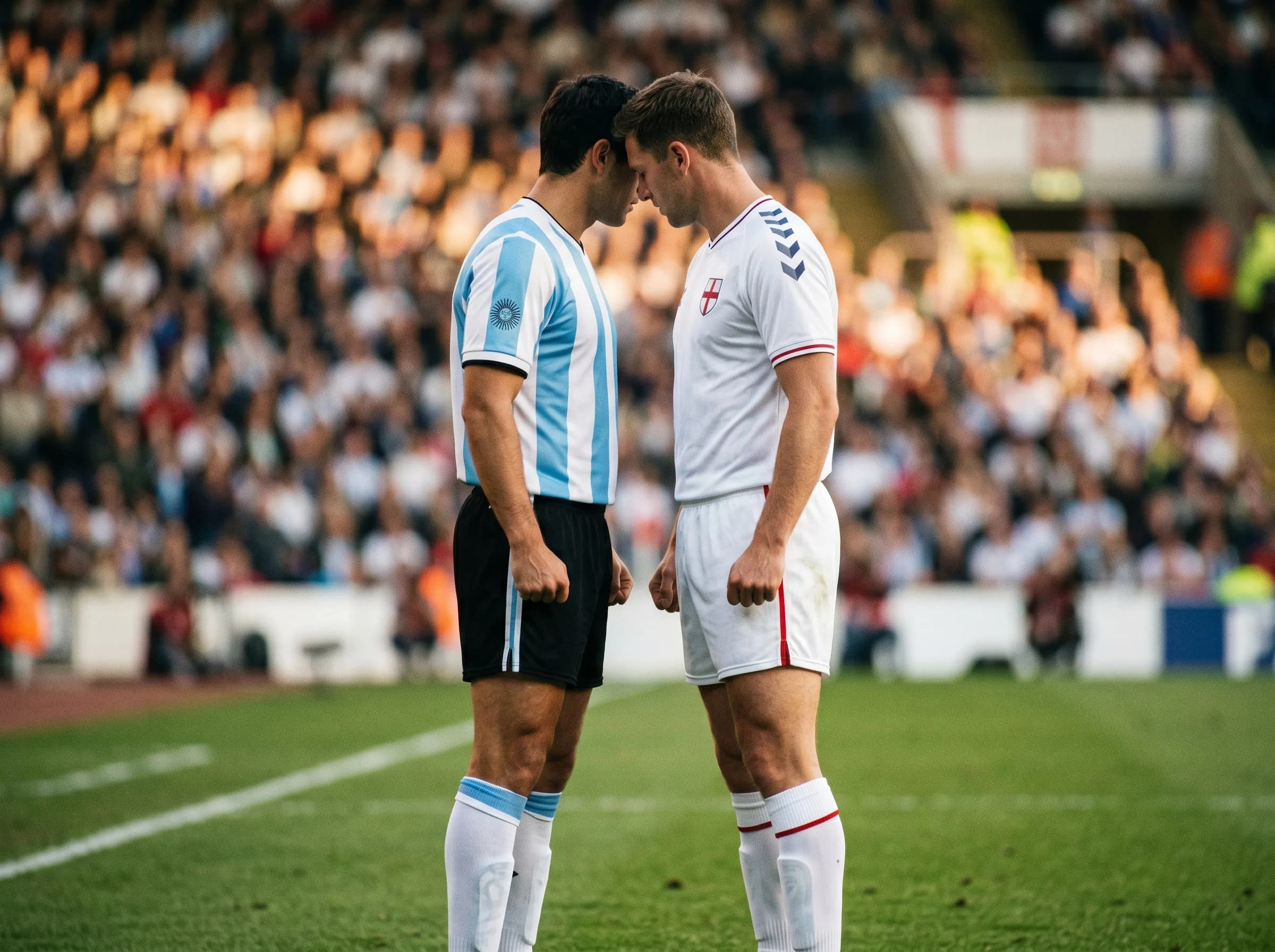
The first World Cup final, on 30 July 1930 in Montevideo, almost did not happen because the two finalists could not agree on which ball to use. Argentina insisted on its preferred ball, made by the Buenos Aires firm Olímpico. Uruguay wanted its own ball, the Tiento, supplied by a local Montevideo manufacturer. The compromise was that Argentina's ball would be used in the first half and Uruguay's in the second. Argentina led 2-1 at half-time. With the Uruguayan ball, the host nation won 4-2 and lifted the inaugural Jules Rimet Trophy.
That was 96 years ago. Since then, the World Cup match ball has gone from a hand-stitched leather sphere to a thermally-bonded panel structure containing an inertial measurement sensor that streams data to officials in real time. The story along the way is one of the most underrated technical strands in modern football.
A loose standard before 1970
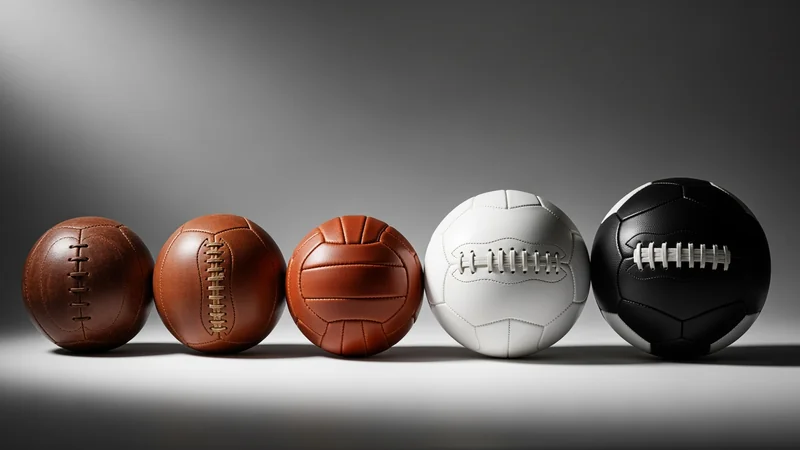
For the first nine World Cups (1930 to 1966), there was no single official ball. Each host federation supplied a ball that met FIFA's basic specification on weight (410 to 450 grams) and circumference (68 to 70 cm). Most balls were leather, hand-stitched, with a laced opening for the inflatable bladder. They absorbed water steadily through 90 minutes and could double in weight in heavy rain. Players who headed the lace-up section commonly broke their noses or, in repeated cases studied much later, suffered the early signs of chronic traumatic encephalopathy (a degenerative brain condition associated with repeated head impacts).
That changed in 1970. FIFA signed Adidas as the official ball supplier for the Mexico tournament, beginning a partnership that has lasted unbroken for fifty-six years. The first Adidas World Cup ball was the Telstar, a 32-panel design with twelve black pentagons and twenty white hexagons. The colour scheme was specifically engineered for the 1970 tournament's status as the first World Cup broadcast live in colour. Black-and-white televisions, still the majority in many markets, showed the ball clearly. The Telstar pattern became the cultural shorthand for football for an entire generation, and remains the icon used in the football emoji today.
The synthetic revolution
The 1986 Azteca, named for the Mexico City stadium that staged the final, was the first World Cup ball with a synthetic surface rather than leather. The change was driven by water absorption, which had affected the 1982 Tango Espana ball during rain at the Spain tournament. The synthetic outer prevented absorption and held a more consistent weight across the full 90 minutes.
By 1994 the technical race had moved to internal structure. The USA tournament's Questra ball used a polystyrene foam layer between the outer panels and the bladder. The foam softened the strike, increased control on the ground, and made the ball travel more predictably in the air. Players reported the Questra felt like a denser ball that was easier to direct. Top scorer Hristo Stoichkov scored six goals in seven matches, half of them from outside the area.
The era of aerodynamic experiments
The early 2000s saw a sustained push to make the ball lighter and faster, partly in response to demands from broadcasters who wanted higher-scoring matches. The Fevernova in 2002 and the Teamgeist in 2006 reduced the panel count to fourteen, then twelve, with thermally-bonded seams instead of stitched ones. Goalkeepers complained that the lighter, smoother balls knuckled unpredictably at long range.
The complaints reached crisis level in 2010 with the Adidas Jabulani at the South Africa tournament. The Jabulani had eight thermally-bonded panels, the fewest of any World Cup ball at the time, and an aerodynamic profile that NASA wind-tunnel testing later confirmed showed unstable flight characteristics in the speed range typical of long-range strikes. Brazilian goalkeeper Julio Cesar called the Jabulani terrible, and Italy's Gianluigi Buffon said it would produce comical mistakes. It did. The 2010 tournament had the lowest goals-per-game total since 1990 and a sequence of high-profile goalkeeping errors.
Adidas responded with the Brazuca in 2014, returning to a six-panel design with a roughened surface that reproduced the air-grip behaviour of older stitched balls. Players widely praised it. The 2014 tournament saw 171 goals in 64 matches, the highest goals-per-game total since 1958.
The connected ball
The 2018 Russia tournament's Telstar 18 was a homage to the original 1970 design and was the first World Cup ball to embed a near-field communication chip. The chip held the ball's serial number and could be tapped with a smartphone to verify authenticity, but did not transmit match data.
Connected ball technology arrived in earnest with the Al Rihla at Qatar 2022. The ball contained a 14-gram inertial measurement unit suspended in the geometric centre by a tensioned wire system. The sensor recorded the ball's position and orientation 500 times per second and streamed the data to a tablet in the video assistant referee booth. The data was used to verify offside decisions: if the sensor recorded the ball being struck at the same instant a forward was beyond the last defender, the offside call was confirmed automatically.
The Adidas ball for 2026 is named Trionda. It maintains the connected ball technology of the Al Rihla and adds a new four-panel surface design intended to reduce the unpredictable knuckle behaviour that plagued earlier low-panel-count balls. The four panels are arranged to give a similar air-grip profile to the six-panel Brazuca while presenting fewer seams to deflect long-range strikes. Pre-tournament testing across Major League Soccer (MLS, the top professional league in the United States and Canada), Liga MX (Mexico's top professional league) and the Canadian Premier League fixtures from autumn 2025 reported predictable flight in the conditions players are likely to encounter at the 2026 venues.
Why the ball still matters
A modern World Cup ball costs Adidas roughly USD 165 to manufacture, mostly because of the sensor package. It retails to consumers for around USD 165 to 200. The total economic impact, however, is measured in television rights, sponsorship and merchandising. Adidas pays FIFA a reported USD 50 million per cycle for the official ball partnership, and reports peak sales of more than ten million replica balls in the year of each tournament.
For the players, the change between cycles is real. A goalkeeper who has trained against the Brazuca for four years will react differently to the Trionda for the first time. National federations request match supplies of the new ball from Adidas as much as eighteen months before the tournament, so squads can practice with the actual ball that will be used. The federations that adapt fastest tend to do best.
The compromise of 1930 turned on which ball each finalist trusted. Almost a century later, the question is the same. Players still spend the year before each World Cup learning the ball that will determine matches. For the venues where the Trionda will be put into competition this June and July, see our stadium guide.