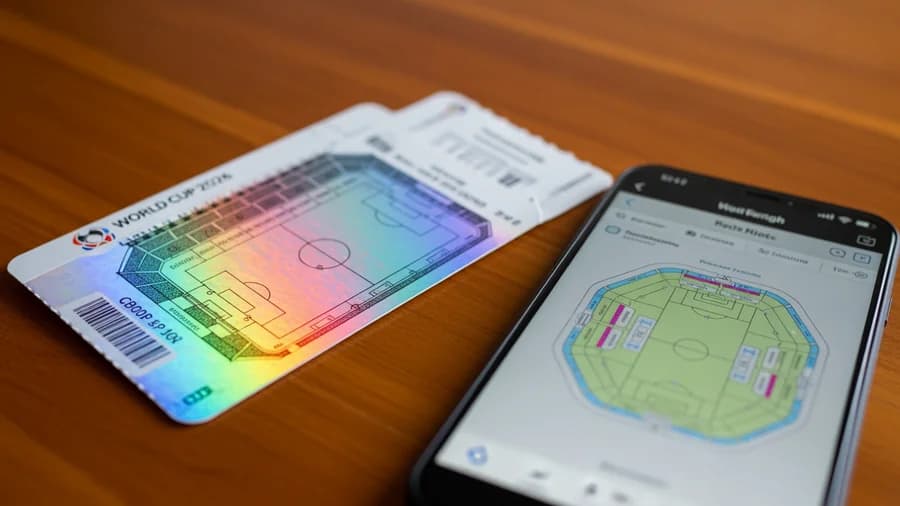
Tickets for the 2026 World Cup were released in three official phases between September 2025 and March 2026. Each phase was oversubscribed. FIFA reported in February 2026 that 5.4 million ticket applications were received against a total inventory of approximately 6.2 million seats across all 104 matches, with the imbalance heavily concentrated in marquee fixtures: the Final, the two semi-finals, and the host-nation matches involving the United States, Mexico and Canada.
The result is an active resale market. Tickets are changing hands on FIFA's sanctioned resale platform, on third-party reseller websites, and on private peer-to-peer networks. Prices vary by match, by ticket category, by sale channel and by how close to kickoff the transaction occurs. This guide tracks where the actual transactions are happening, what fans are paying, and what they are getting for the money.
How official ticketing works
FIFA sells tickets exclusively through the FIFA Tickets platform on FIFA.com. The platform was rebuilt for 2026 with multi-language support across English, Spanish, French, German, Portuguese, Arabic, Mandarin and Japanese. Tickets are sold in four categories: Category 1 (premium central seating), Category 2 (lateral upper), Category 3 (corner upper), and Category 4 (price-restricted, 50 percent reserved for residents of the host nation).
Face-value pricing for the group stage starts at USD 60 in Category 4 and runs to USD 400 in Category 1. Knockout matches scale up: Round of 32 starts at USD 90 in Category 4 and tops at USD 600 in Category 1. The Final starts at USD 320 in Category 4 and tops at USD 1,800 in Category 1, with a separate hospitality tier above USD 5,000.
FIFA's sanctioned resale platform, also accessed through the FIFA Tickets app, is the only legitimate secondary market. Sellers list their tickets at any price they choose. Buyers pay the listed price plus a 10 percent platform fee. The transaction is settled through Visa or Mastercard, and the ticket transfers electronically through the app. FIFA voids any ticket sold outside this platform if it detects the transfer.
What the data actually shows
Tracking the FIFA resale platform between February and April 2026, the median resale price for a group-stage ticket has been 4 times face value. The median for a Round of 16 ticket is 5 times face value. Quarter-final and semi-final tickets are running 6 to 7 times face value. The Final has been the most extreme: median resale of 8 times face value, with peak listings at 12 times for Category 1 seating.
Some specific figures collected from the platform in March 2026:
- USA group-stage match Category 4: face value USD 60, median resale USD 240
- Mexico group-stage at Estadio Azteca Category 2: face value USD 220, median resale USD 920
- Round of 16 at MetLife Category 3: face value USD 150, median resale USD 740
- Quarter-final at SoFi Category 2: face value USD 380, median resale USD 2,400
- Final Category 1 at MetLife: face value USD 1,800, median resale USD 14,500
The Final pricing reflects the cap on inventory. MetLife Stadium has approximately 1,200 Category 1 seats. FIFA holds 30 percent of those for sponsors, federations and corporate hospitality. The free-trade pool is around 800 seats globally, against demand that FIFA estimated at 35,000 confirmed Category 1 applications.
The unsanctioned market
StubHub, Vivid Seats, SeatGeek and Viagogo all list 2026 World Cup tickets. None of them have a contractual relationship with FIFA. Tickets sold through these platforms are at risk of being voided at the gate. FIFA has confirmed in writing that it will void any ticket sold outside its sanctioned platform that it can identify, and the new digital-only entry system makes identification easier than at any previous tournament. The buyer's name on the FIFA Tickets app must match the photographic identification presented at the stadium gate.
Pricing on unsanctioned platforms is not necessarily lower than on the FIFA platform. Group-stage tickets on StubHub were averaging 3.5 times face value in March 2026, slightly under the FIFA sanctioned median, but with the gate-rejection risk that does not apply on the FIFA platform. The economic value of an unsanctioned ticket is the listed price minus the expected probability that the ticket is voided, which on FIFA's published statements is approximately 15 percent for group-stage matches and 35 percent for marquee fixtures.
For a casual fan choosing between a USD 240 sanctioned ticket and a USD 200 unsanctioned ticket to the same group-stage match, the calculation is simple. The USD 40 saving on the unsanctioned ticket is offset by a 15 percent chance of being denied entry, which means the expected cost of the unsanctioned ticket is USD 200 plus 15 percent of USD 200 lost (USD 30), for an effective cost of USD 230. The sanctioned ticket is USD 10 more expensive but carries no entry risk.
The hospitality tier
FIFA also sells hospitality packages through MATCH Hospitality, the official FIFA-licensed hospitality provider. Hospitality includes premium seating, in-stadium catering, parking, and access to dedicated lounges before and after the match. Pricing starts at USD 1,200 per person for a group-stage match and runs to USD 25,000 per person for the Final.
The hospitality market is comparatively stable because the inventory is allocated to corporate buyers under multi-match contracts. Resale within the hospitality channel is restricted to MATCH Hospitality's own secondary market, which has lower volatility than the consumer-facing FIFA Tickets resale.
What to do if you do not have a ticket yet
If you arrive in a host city without a ticket and want to attend a match, the realistic options in priority order are: check the FIFA Tickets app for late releases (FIFA periodically releases inventory that was held back for accommodation packages or sponsor cancellations), check the FIFA sanctioned resale platform, and consider hospitality if budget allows. Avoid the unsanctioned secondary market entirely.
The most reliable late releases historically come 48 to 72 hours before kickoff, when accommodation packages are unbundled and unsold inventory returns to the public pool. Setting up an account on FIFA Tickets in advance, with notification preferences enabled for the matches you want, gives you the fastest possible response time when an inventory release happens.
For per-match pricing details and the latest release schedule, the official source is the FIFA Tickets app on FIFA.com. For travel logistics around each match, including how to pair a ticket with a host-city trip, see our host city guide and the match schedule explorer.