A trip to the 2026 World Cup is unusual among major travel events because the tournament spans three host countries with very different climates, infrastructures and packing realities. A fan flying from London for a single match in Toronto needs different gear than a fan from Berlin attending a five-match itinerary across Mexico City, Los Angeles and New Jersey. This guide is built around the practical packing decisions that change depending on where you are going.
The list is organised in three layers. The first layer is what every fan needs regardless of itinerary. The second layer is what changes depending on your host city or cities. The third layer is what to leave at home because it will not be useful or is prohibited at the venues.
Layer 1: what every fan needs
Independent of which host city you are visiting, the following items are non-negotiable:
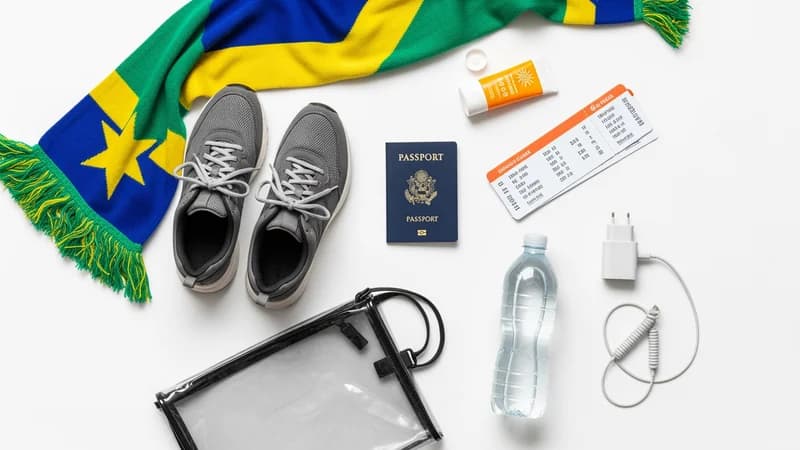
- Valid passport with at least six months of remaining validity beyond your return date. The United States, Canada and Mexico all enforce the six-month rule for entry.
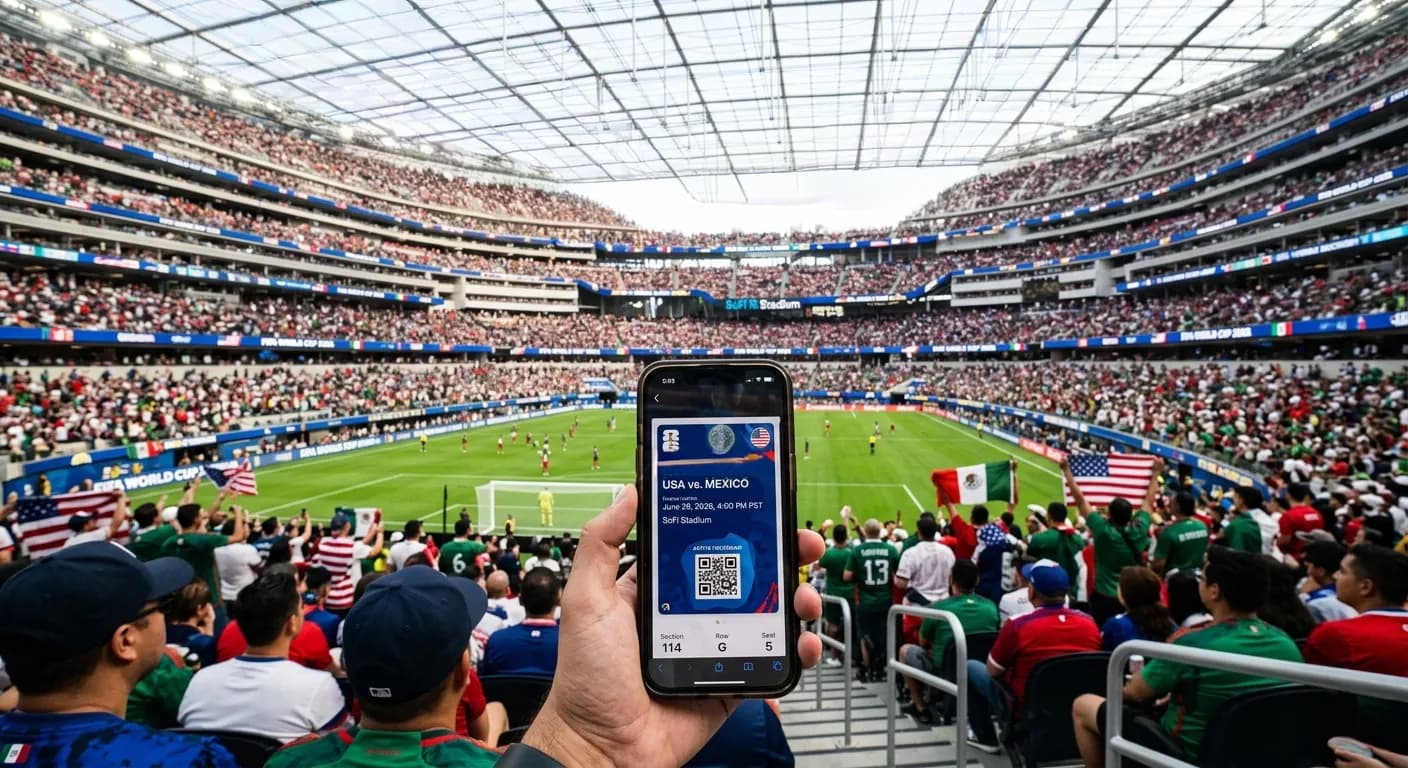
- Smartphone with the FIFA Tickets app installed, authenticated and tested before travel. The app is the only valid match ticket for 2026; there is no paper alternative at the gate.
- Power bank (20,000 mAh or smaller, to comply with airline carry-on rules) and the correct cable for your phone. Stadium battery drain on match day is the single largest cause of gate denial.
- Government-issued photo identification matching the name on your tickets. Passport works in all three countries; your home country's national ID may not be accepted in Canada or the US.
- Any medication you take regularly, in original labelled packaging, with a copy of the prescription. The three host countries' customs officials may inspect medication at entry.
- One credit card with no foreign transaction fees, plus a backup card on a different network. Visa, Mastercard and American Express are widely accepted; Discover and JCB are not in Mexico or Canada.
- One pair of comfortable walking shoes you have already broken in. Stadium walks are 1.5 to 3 kilometres from the nearest transit stop or parking lot.
Layer 2: what changes by host city
The 16 host cities cluster into four climate groups. Pack to match the cities on your itinerary, not all 16.
The southern heat group: Miami, Houston, Dallas, Atlanta, Monterrey, Guadalajara
Daytime temperatures of 32 to 38 degrees Celsius (90 to 100 Fahrenheit) are the norm. Humidity in Miami and Houston tops 75 percent in June and July. Pack lightweight breathable clothing, a wide-brimmed hat, factor-50 sunscreen, electrolyte tablets for the longer outdoor walks, and a small foldable umbrella for the afternoon thunderstorm pattern that is common in the southeastern US in mid-June.
The temperate group: New York / New Jersey, Boston, Philadelphia, Kansas City
Daytime temperatures of 25 to 30 degrees Celsius (75 to 85 Fahrenheit), with cooler evenings in the low-20s (around 70 Fahrenheit). A light jacket or hoodie for evening matches is useful. Rain is sporadic but can be sustained; a packable rain jacket is worth the space.
The Pacific group: Los Angeles, San Francisco Bay Area, Seattle, Vancouver
Highly variable. Los Angeles is dry and warm (28 to 32 Celsius daytime). The Bay Area has the famous summer fog that drops evening temperatures into the mid-teens (60 Fahrenheit). Seattle and Vancouver run cooler still, with regular drizzle. Layers matter more in this group than in any other. A lightweight waterproof jacket plus a long-sleeve base layer covers the variability.
The high-altitude group: Mexico City
Mexico City sits at 2,240 metres above sea level. The temperature is moderate (22 to 26 Celsius daytime) but the altitude affects packing in three ways. First, sunscreen with factor 50 minimum is essential; UV exposure at altitude is roughly 25 percent higher than at sea level. Second, a refillable water bottle is critical because dehydration accelerates at altitude. Third, allow space for an extra day of rest after arrival before you attend a match if you are flying in from sea level.
What to wear to the stadium
Every host venue has the same gate restrictions, set by FIFA and enforced by stadium security:
- Bags are limited to one small clear plastic bag per person, maximum 30 cm by 30 cm by 15 cm. Stadium-branded clear bags are sold at most venues for around USD 15 if you arrive without one.
- Selfie sticks, professional cameras with detachable lenses, drones and tripods are prohibited. Smartphone cameras and small point-and-shoot cameras are allowed.
- Outside food and beverage are prohibited. A sealed bottle of water up to 500 ml per person is permitted at most US and Canadian venues; the Mexican venues restrict water bottles entirely (concession water is sold inside).
- Banners, flags and signs are permitted up to 2 metres by 1 metre. Larger banners require advance approval from FIFA's stadium operations team.
- Replica jerseys are encouraged. Officially licensed kits sold by Adidas (the official ball and apparel partner) are widely available at venue stores. Counterfeit jerseys are not prohibited at the gate but are confiscated if security identifies them.
Currency and payment
The three host countries each use their own currency: US Dollar (USD), Canadian Dollar (CAD), and Mexican Peso (MXN). Cross-currency exchange at airport kiosks is the worst rate available. The cleanest approach is:
- Bring one credit card with no foreign transaction fee. Most card transactions in all three countries process at the inter-bank exchange rate plus the card network's standard fee, which is the cheapest exchange route.
- Withdraw small amounts of local cash from ATMs at major bank branches (not airport ATMs or convenience-store ATMs, which charge USD 5 to 8 per withdrawal). Approximately USD 100 equivalent per host city covers tipping, taxis and small vendor purchases.
- Tipping conventions differ. The United States expects 18 to 20 percent on restaurant bills and USD 1 to 2 per hotel-bag carry. Canada is similar at 15 to 18 percent on restaurants. Mexico expects 10 to 15 percent on restaurants, with cash preferred for small-vendor tipping.
Layer 3: what to leave at home
Two categories of items are best left behind because they will be confiscated, restricted or simply unusable:
- Power adapters from your home country. The three host countries all use Type A and B plugs (the flat two-pin and grounded three-pin North American standard). European, Asian and African travellers need a North American plug adapter, but the same adapter works in all three host countries. Buy one universal adapter; do not bring multiple.
- Items prohibited by FIFA at every venue: pyrotechnics, laser pointers, drones, professional camera equipment with detachable lenses (above 20 cm length), large flags on poles, and political signage that contravenes FIFA's stadium code of conduct. The full prohibited list is published on FIFA.com under the venue access section.
For per-city travel logistics, hotel pricing data and venue-specific guidance, see our host city guide. For weather-specific planning, the weather guide covers each city's June and July patterns in more detail.