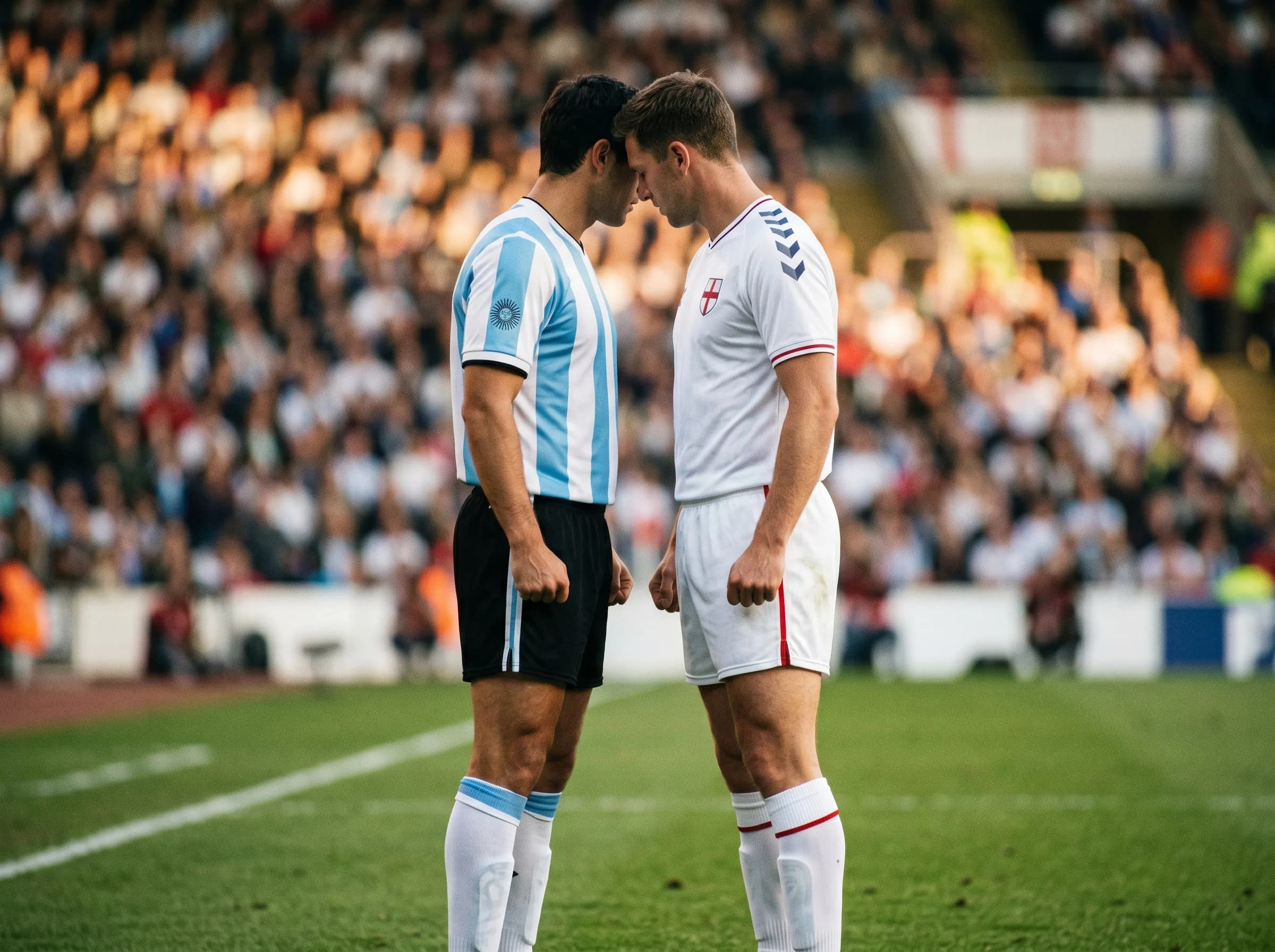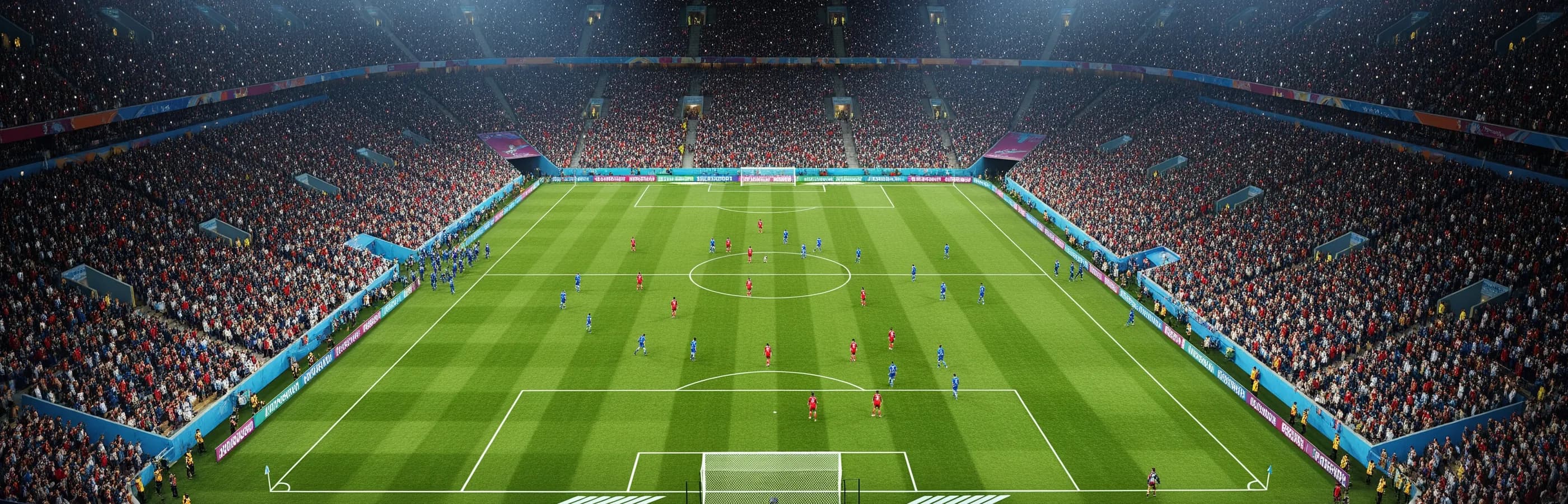
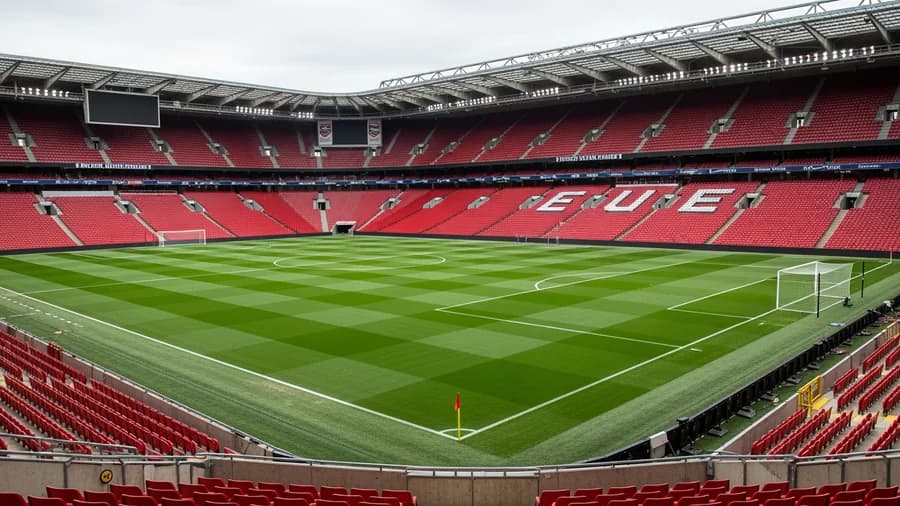
The first FIFA World Cup, held in Uruguay in 1930, had 13 teams. Some teams refused to attend because of the Atlantic Ocean crossing. The tournament played 18 matches in 18 days at three stadiums in Montevideo. The total attendance was approximately 590,000.
The 2026 World Cup, kicking off on 11 June at the Estadio Azteca in Mexico City, has 48 teams. It plays 104 matches across 39 days at 16 stadiums in three countries. FIFA's official projected attendance is 6.2 million, with another 5 billion expected to watch portions of the broadcast. Every infrastructure number associated with the tournament is the largest in its history. The 2026 edition is not just bigger than 2022. It is bigger than the previous five tournaments combined on most measures.
The format expansion history
The World Cup field has been expanded six times since 1930. The 1934 tournament in Italy used a 16-team straight knockout. That format held with minor variations until 1982, when the field expanded to 24 teams in Spain. The 1998 tournament in France introduced the 32-team format that held for seven cycles (1998, 2002, 2006, 2010, 2014, 2018, 2022).
The 48-team expansion was approved by the FIFA Congress (the annual general assembly of all 211 member federations, the highest decision-making body in world football) in January 2017 in a unanimous vote. The original proposal was for 16 groups of three teams, with the top two from each advancing. After analysis from FIFA's competitions department, the format was revised in March 2023 to 12 groups of four, with the top two automatically advancing plus the eight best third-place finishers across all groups. That structure produces 32 knockout qualifiers and a new Round of 32 added between the group stage and the old Round of 16.
The Round of 32 is the format's most consequential addition. It guarantees that 16 of the 48 teams play at least four tournament matches (group stage plus one knockout), where in the 32-team format only 16 of 32 teams played four matches.
Sixteen stadiums and the geography
The 2022 World Cup in Qatar used eight stadiums, all within 50 kilometres of central Doha. The 2026 World Cup uses sixteen, distributed across an area roughly 5,500 kilometres east-to-west and 3,200 kilometres north-to-south. The southernmost stadium (Estadio Akron, Guadalajara) is closer to the equator than Mexico's Yucatán peninsula. The northernmost (BC Place, Vancouver) is at the same latitude as London.
The largest venue, MetLife Stadium in New Jersey, hosts the final on 19 July with a capacity of 82,500. The smallest, BMO Field in Toronto, has been expanded to approximately 45,500 for the tournament. The total combined seating across the 16 venues is approximately 1,074,000. The smallest 2026 venue is larger than the largest stadium used at the 1934 World Cup (Stadio Nazionale PNF in Rome, 47,300).
The 16 host cities span four continents of climate: Pacific Northwest (Seattle, Vancouver, San Francisco), the southern desert (Dallas, Houston, Monterrey, Guadalajara), the southeastern humid subtropical (Atlanta, Miami), the northeast continental (New York/New Jersey, Boston, Philadelphia, Toronto), the central plains (Kansas City), the high-altitude valley (Mexico City), and the Mediterranean climate (Los Angeles).
Three countries, three currencies, three time zones
No previous men's World Cup has been hosted by more than one country. The 2002 tournament in South Korea and Japan was technically a co-host, but the two host federations operated independently with separate ticketing systems and team bases. The 2026 bid won by FIFA's selection committee was specifically a unified three-country bid, with shared ticketing, a shared volunteer programme and a shared broadcast operation.
The logistical complications are significant. Players, supporters and officials cross three international borders during the tournament. The currency, mobile phone roaming, electrical plug standard and language change with each border. Visa requirements for some Asian and African nationalities differ between the three countries.
For broadcasters, the time-zone span is also a challenge. The Atlantic Time Zone (Atlantic Canada) and Pacific Time Zone (Vancouver) are four hours apart. A match at 8pm in Vancouver kicks off at midnight in Atlantic Canada. The peak broadcast slot for European audiences is 3pm to 6pm Eastern, which is morning in Pacific. The schedule has been built to maximise the European prime-time window where possible.
Player workload
A finalist at the 2026 World Cup plays eight matches over 39 days. That is one more match than at any previous World Cup. The expanded format has been criticised by player associations for adding workload at the end of an already long club season. The international fixtures calendar agreed by FIFA, UEFA (Europe's football confederation), CONMEBOL (the South American football confederation) and the other four continental confederations in 2024 includes a guaranteed seven-day rest window between the last club match and the start of national team duties for the World Cup.
The actual on-pitch minutes for a finalist work out at roughly 720 minutes (eight matches at 90 minutes), or 870 if extra time is required in three knockout matches. By comparison, an English Premier League season is typically 3,420 minutes for a starter who plays every match. So the World Cup adds 25 to 28 percent additional load to a player's annual total in the space of six weeks.
The broadcast and economic numbers
FIFA's projected revenue from the 2026 World Cup is USD 11 billion across all sources (broadcast rights, sponsorship, ticketing, hospitality, licensed merchandise). That is roughly 50 percent higher than the 2022 cycle's USD 7.5 billion. Broadcast rights alone are projected at USD 4 billion. Adidas pays approximately USD 50 million for the official ball partnership. The official sponsor tier (Visa, Coca-Cola, Hyundai-Kia, Wanda Group, Adidas, McDonald's) collectively pays in the high USD 100 millions per cycle.
The host countries fund the infrastructure separately. The combined US, Canadian and Mexican public spending on World Cup-related infrastructure (stadium renovations, transit upgrades, security) is estimated at USD 5 to 7 billion. The 1994 USA tournament cost roughly USD 30 million in 1994 dollars, which adjusts to USD 65 million today. The 2026 tournament costs are 75 to 100 times higher.
What it means for the football
Whether bigger is better is the open question. Critics point to the dilution argument: more teams means more weaker teams, which means more routine group-stage results. Defenders of the expansion point to representation: 16 nations get to play in a World Cup that would not have qualified under the old format. For supporters in those 16 nations, the calculus is clear.
The actual football quality at the elite end is unaffected. France, Argentina, Brazil, Spain and England would have qualified under any format. The new bracket structure adds one more match for finalists, which is interesting tactically: a Round of 32 between a group winner and a third-place finisher creates a different match shape than the Round of 16 of the previous format. Whether it produces better football remains to be seen.
For the full schedule of all 104 matches, see our match explorer. For the bracket and knockout path, see the bracket page.