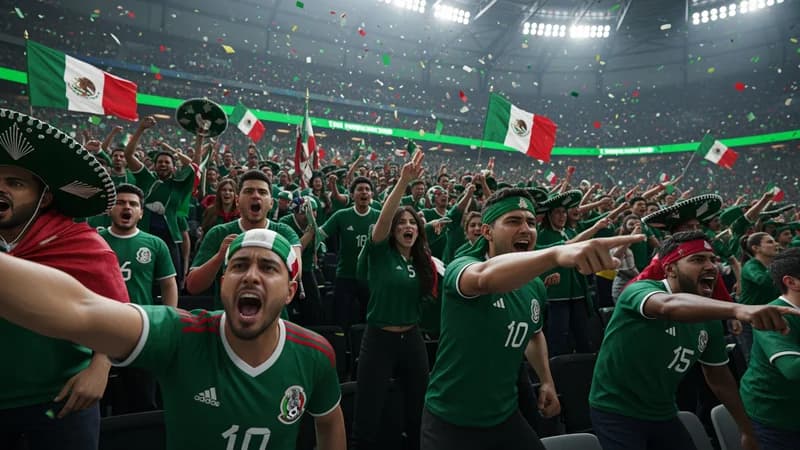
Mexico will play its first match of the 2026 World Cup at home, in Mexico City, on Thursday 11 June. The opener will be the first match of the entire tournament. It will also make the Estadio Azteca the only stadium in football history to host games at three different World Cups, after the 1970 and 1986 editions.
For Mexican supporters, the symbolism is hard to overstate. The Azteca is where Pelé won his third World Cup in 1970, and where Diego Maradona scored both the Hand of God goal (a punched header that the referee allowed because he did not see the handball) and his solo run against England in the 1986 quarter-final. Six decades on, the same ground will stage the opening kickoff of an expanded 48-team tournament.
Thirteen home games across three cities
Mexico is one of three host nations alongside the United States and Canada. Of the 104 matches in the 2026 schedule, 13 are played in Mexico, all in the group stage. The split is:
- Mexico City (Estadio Azteca): 5 matches
- Guadalajara (Estadio Akron): 4 matches
- Monterrey (Estadio BBVA): 4 matches
Every Mexican knockout match from the Round of 32 onward moves north of the border. That detail matters for travelling supporters. A fan following El Tri (the Mexican national team's nickname, taken from the country's tri-colour flag) exclusively has a clean three-city Mexico itinerary for the group stage, and would only need a US trip if Mexico advances to the knockouts.
Internal flights between the three Mexican host cities run two hours or less and currently average USD 80 round trip on Volaris or Aeromexico. The drive between Guadalajara and Mexico City is around six hours on the 15D toll road.
What hosting the opening match actually means
Hosting the opening match is a fixed FIFA tradition for the World Cup host nation. Brazil opened its 2014 tournament against Croatia. Russia opened 2018 against Saudi Arabia. Qatar opened 2022 against Ecuador. Mexico's opponent will be confirmed at the official draw, but the slot itself is locked in.
Two practical consequences follow. First, the opening match guarantees a global TV audience that exceeded 800 million viewers at the 2022 edition, based on FIFA's own reporting. Second, FIFA mandates that the home federation of the opening match is responsible for the opening ceremony. The Mexican Football Federation has retained the cultural agency that produced the closing of the 1986 tournament and is preparing what FMF president Yon de Luisa described in May 2024 as a ceremony rooted in pre-Hispanic Mexican identity.
The Estadio Azteca: capacity, altitude, history
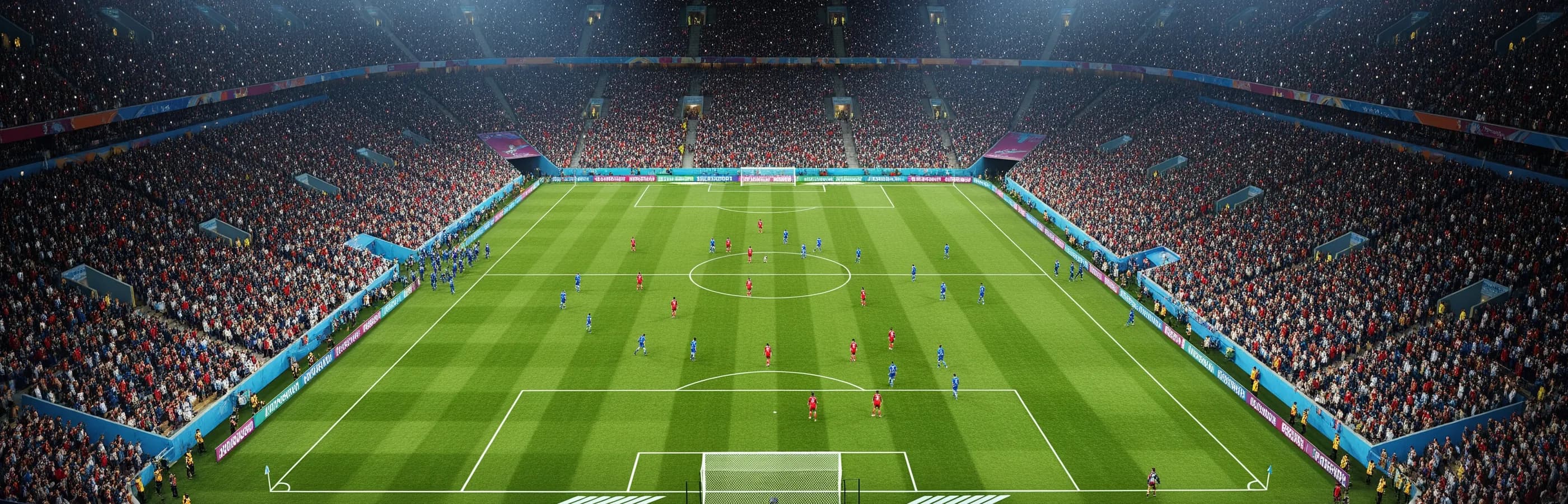
The Azteca opened in 1966 and is owned by Grupo Televisa. For 2026 the capacity has been reduced to approximately 83,000 from a historical peak above 105,000, in line with FIFA's all-seater requirement and current safety standards. The reduction does not soften the atmosphere.
The stadium sits at 2,240 metres above sea level, which is high enough to affect aerobic performance for sea-level players in the first 48 hours after arrival. Multiple studies in the British Journal of Sports Medicine have measured a 7 to 12 percent drop in maximum aerobic capacity at that altitude in unacclimatised athletes.
The venue underwent a multi-year refurbishment between 2023 and late 2025. The works included new LED floodlighting to FIFA broadcast specification, expanded media and corporate hospitality areas, and a full re-laying of the playing surface. Liga MX (the top professional football league in Mexico) matches resumed at the venue in November 2025 to allow Grupo Televisa and the Mexican Football Federation to identify any operational gaps before the tournament.
Aguirre's third stint
Javier Aguirre returned to the Mexico job in August 2024. It is his third stint with El Tri. He coached the team at the 2002 and 2010 World Cups, reaching the Round of 16 on both occasions.
His brief from the Mexican Football Federation, repeated in his post-appointment press conference, was to deliver a quarter-final at minimum on home soil. That target sits against an uncomfortable backdrop. Mexico has reached the Round of 16 (the second knockout phase, which under the new format follows a Round of 32) at every World Cup it played in from 1994 to 2018, and lost at that stage every single time. Seven consecutive Round of 16 exits across seven cycles. The 2022 group-stage exit in Qatar was the first failure to advance since 1978.
The squad is built around Edson Alvarez of West Ham United in midfield, Santiago Gimenez of AC Milan at the spearhead of the attack, and Hirving Lozano of PSV Eindhoven on the wing. Goalkeeping is split between Guillermo Ochoa, the five-time World Cup veteran now playing in Liga MX with Club America, and the younger Luis Malagon. Aguirre named Alvarez as captain in November 2024.
What home field actually buys you
Of the 22 men's World Cups played, the host has won six (Uruguay 1930, Italy 1934, England 1966, West Germany 1974, Argentina 1978, France 1998) and reached at least the semi-finals on fourteen occasions. That is a meaningful pattern. The reasons are not mystical: home crowds drive marginal officiating decisions, the travel and time-zone burden falls on the visiting teams, and the squad gets to sleep in its own beds for the most demanding part of the cycle.
Two recent host nations missed the cut: South Africa was eliminated in the group stage in 2010, and Qatar in 2022. Both are recent enough that the Mexican coaching staff is treating advancement as something that has to be earned, not assumed.
For travelling fans
If you are planning a trip around El Tri, three practical points matter. First, hotel inventory in all three Mexican host cities is now 60 to 70 percent pre-booked through FIFA's official hospitality partners, and rates have roughly doubled compared to neighbouring May or July dates. A three-star Mexico City hotel during the World Cup window is averaging MXN 4,500 per night (Mexican pesos, the local currency) (around USD 230), against MXN 1,800 in May 2025.
Second, tickets sell only through the official FIFA platform on FIFA.com. Resale tickets for Mexico's group matches have appeared on secondary marketplaces at four to six times face value, and FIFA has confirmed it will void any ticket sold outside its sanctioned channel. Group-stage Category 4 seats started at USD 60 in pre-sale, with Category 1 above USD 250.
Third, do not underestimate the altitude effect on your own visit. If you are flying in from sea level for an Azteca match, you will feel it. Allow at least 24 hours before kickoff for acclimatisation, drink water steadily, and skip the heavy meal before the match.
For full match-day logistics including stadium transit, security gates and tipping conventions, see our Mexico City fan guide, the Estadio Azteca venue page, and the general match-day guide. This is the third time Mexico hosts the men's World Cup, and the first as part of a three-country bid. There may not be another moment quite like it for a generation.