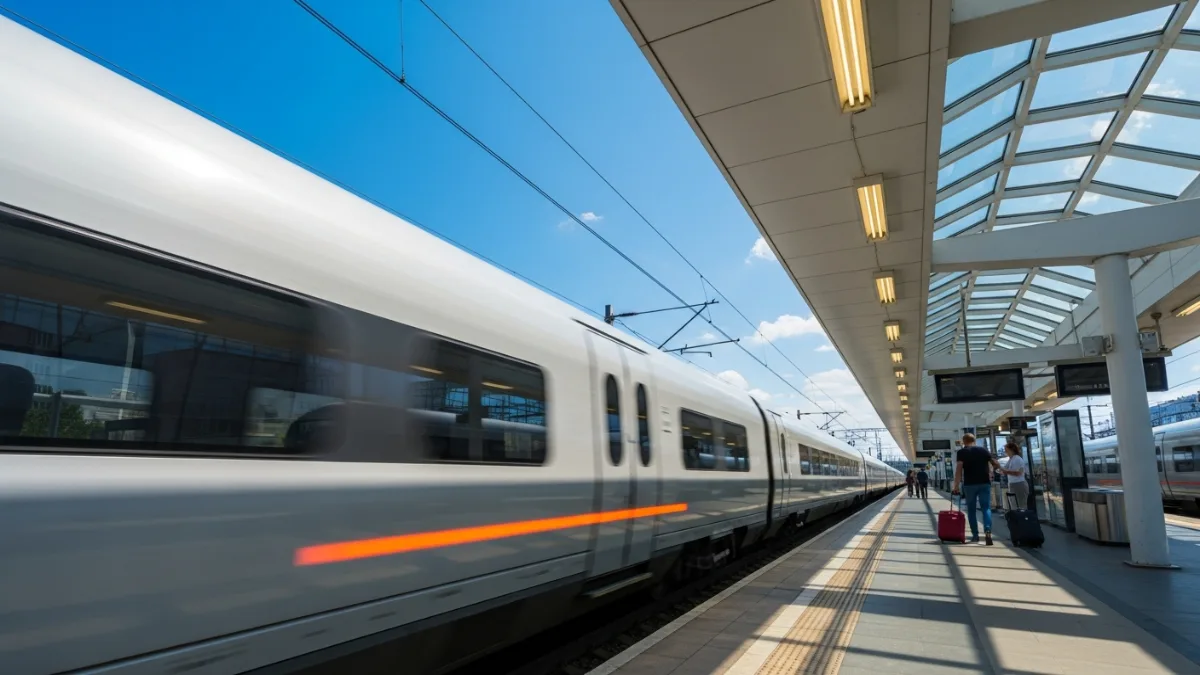
World Cup 2026 Transport Between Cities
Your complete guide to travelling between all 16 FIFA World Cup 2026 host cities across the USA, Canada, and Mexico. By air, rail, bus, and road.
Know Before You Go
Juggling matches in Dallas, Miami, and New York sounds exciting, until you realise they are separated by over 2,000 miles. Getting your transport strategy right could save you hundreds of dollars and dozens of wasted hours, or cost you your match if you get it wrong. This page compares every way to travel between all 16 host cities across the USA, Canada, and Mexico, covering flights, trains, buses, and driving, with real prices, booking links, and cross-border advice so you arrive on time, every time.
Book Transport Early, Prices Are Already Rising
Flights and buses between host cities will surge in price as the tournament approaches. Domestic US flights should be booked 6–8 weeks ahead, cross-border flights 8–12 weeks. Use the route finder below to compare all options now.
Plan Your Journey Between Cities
Select any two host cities to see every transport option, cost, and booking link, or plan a multi-city trip
Select your departure and arrival cities above to see all available transport options with prices and booking links.
This journey planner covers transport between all 16 FIFA World Cup 2026 host cities including Vancouver, Seattle, San Francisco, Los Angeles, Guadalajara, Mexico City, Monterrey, Kansas City, Dallas, Houston, Atlanta, Miami, Philadelphia, New York/New Jersey, Boston, and Toronto. Options include flights, Amtrak trains, Greyhound and FlixBus buses, ADO and ETN buses in Mexico, Via Rail and Porter in Canada, and driving routes with rental car guidance.
Flights Between Host Cities
Flights Between World Cup 2026 Host Cities
Fastest option for most routes, with dozens of daily flights between major cities
Flying is the fastest way to move between most host cities, especially cross-country or cross-border routes. Major US carriers (American, United, Delta, Southwest) and budget airlines (Spirit, Frontier, JetBlue) connect all US host cities. In Canada, Air Canada, WestJet, Porter, and Flair Airlines operate. In Mexico, Aeromexico, Volaris, and VivaAerobus provide frequent affordable service.
Flight Price Reality Check
Dallas → Miami: $60–130
3h · American, Spirit
New York → Dallas: $80–150
3h 45min · American, JetBlue
LA → Seattle: $50–100
2h 45min · Alaska, Southwest
Toronto → US cities: $90–280
1.5–3.5h · Air Canada, Porter
CDMX → Guadalajara: $40–80
1h 15min · Volaris, Aeromexico
New York → Miami: $60–120
3h 15min · JetBlue, Spirit
🇺🇸 US Airlines
American, United, Delta (full-service), Southwest (2 free bags), Spirit & Frontier (ultra-low-cost, bags extra $30 to $60). Compare total cost including luggage.
🇨🇦 Canadian Airlines
Air Canada (largest network), WestJet (competitive fares), Porter (premium-feel, Toronto Island airport), Flair (ultra-low-cost). Prices include all taxes.
🇲🇽 Mexican Airlines
Aeromexico (full-service, Mexico City hub), Volaris and VivaAerobus (ultra-low-cost, fares from $30). Excellent domestic coverage between all 3 Mexican host cities.
When to Book
Domestic US flights: 6–8 weeks before. Cross-border (US↔Canada, US↔Mexico): 8–12 weeks before. Set price alerts on Google Flights to catch drops.
Baggage Tip
Budget airlines (Spirit, Frontier, Volaris, VivaAerobus) charge $30–60 per bag. Factor baggage into your cost comparison. Southwest includes 2 free checked bags on every fare.
Always compare all three platforms, as prices vary by route and date.
Trains & Buses Between World Cup 2026 Cities
Ground transport, affordable and sometimes scenic
🇺🇸US Rail & Bus
Amtrak Northeast Corridor is the star: Boston → NYC (3.5h, from $25), NYC → Philadelphia (1h 10min, from $15). The Acela is faster but standard Regional is excellent value. Most other Amtrak routes are too slow for fans. Dallas → Chicago takes 22 hours by train. FlixBus and Greyhound cover most intercity routes affordably.
🇨🇦 Canada
VIA Rail: Toronto → Montreal (5h), Toronto → Ottawa (4.5h). Toronto → Vancouver is scenic but takes 3 days, not practical for fans. GO Transit covers Greater Toronto. FlixBus and Megabus run cross-border to Buffalo and NYC. Porter Airlines from Toronto Island is often faster and affordable.
🇲🇽 Mexico
Mexican first-class buses are exceptional: reclining seats, WiFi, snacks, movies. ETN Diamante is like business class on a bus. CDMX → Guadalajara: 5.5h, ~$18–50. CDMX → Monterrey: 10h, ~$30–70 (fly instead). Book at etn.com.mx or ado.com.mx.
Driving Between World Cup 2026 Cities
Maximum flexibility, rent a car or road trip between matches
Renting a car gives you flexibility, especially in the US where cities are spread apart and road infrastructure is excellent. Best for short-to-medium distances (under 6 hours) or group travel where you can split costs. Always factor in parking fees near stadiums, which can be $30 to $80 on match days.
🚗 Rental Car Guide
- • Best platforms: Rentalcars.com, Enterprise, Hertz
- • One-way rentals: Available but add $50–200 drop-off fees
- • Insurance: Decline CDW if your credit card covers it, saves $15 to $25/day
- • Gas: US gas is cheap (~$3.50/gallon). Fill up before returning
⚠️ Important Restrictions
- • US rentals cannot enter Mexico. Return at border and arrange separate transport
- • US→Canada rentals: Most companies allow with advance notice
- • International Driving Permit: Required for non-English licence holders
- • Parking near stadiums: $30 to $80 on match days, book in advance or use park-and-ride
Southwest World Cup Road Trip
LA → San Francisco → Seattle: Drive the Pacific Coast Highway between matches. LA to SF is 6 hours (or 8 via scenic PCH), SF to Seattle is 12 hours via Portland. Rent a convertible for PCH. It's one of the world's best drives and an unforgettable World Cup memory.
Cross-Border Travel for World Cup 2026
Crossing between USA, Canada, and Mexico, what you must know
🇺🇸🇨🇦US–Canada Border
Top fan crossings: Niagara Falls/Rainbow Bridge (Toronto↔Buffalo), Ambassador Bridge (Toronto↔Detroit), Peace Arch (Vancouver↔Seattle).
Documents: Passport required. Plus eTA (Canada, if flying) or ESTA/visa (US). Check nationality-specific requirements on our visa page.
Wait times: 30 min–3 hours during tournament peak. Check CBSA and CBP for live wait times before departing.
🇺🇸🇲🇽US–Mexico Border
Top fan crossings: Nuevo Laredo↔Laredo (for Monterrey), Tijuana↔San Diego, Nogales (Arizona).
Documents: Passport + FMM tourist card (provided on plane or at border). Carry proof of sufficient funds and return ticket.
Rental cars: Most US rental companies do NOT allow vehicles into Mexico. Return at the border and arrange separate Mexican transport. See our visa page for full requirements.
🚫 What You Cannot Bring Across Borders
• Fresh fruits, vegetables, and meat products
• More than 1L of alcohol duty-free (varies by border)
• Undeclared cash over $10,000 USD equivalent
• Certain medications without a prescription copy
How Much Does It Really Cost?
Compare transport costs between popular World Cup 2026 city pairs
| Route | ✈️ Flight | 🚌 Train/Bus | 🚗 Drive | Flight Time |
|---|---|---|---|---|
| New York → Philadelphia | $60–120 | $15–35 | $20–30 | 1h |
| Dallas → Houston | $50–100 | $15–30 | $25–40 | 1h |
| LA → San Francisco | $40–80 | $15–30 | $40–60 | 1h 20min |
| New York → Miami | $60–120 | $40–70 | $100–150 | 3h 15min |
| Dallas → Miami | $60–130 | No direct | $90–130 | 3h |
| Toronto → New York | $90–180 | $25–50 | $60–90 | 1h 30min |
| Seattle → Vancouver | Not needed | $15–30 | $20–30 | N/A |
| CDMX → Guadalajara | $40–80 | $18–30 | $50–70 | 1h 15min |
| CDMX → Monterrey | $40–80 | $30–50 | $60–90 | 1h 40min |
| Dallas → Monterrey | $80–160 | No direct | $60–90* | 2h |
| New York → Dallas | $80–150 | No direct | $120–180 | 3h 45min |
| LA → Seattle | $50–100 | No direct | $100–150 | 2h 45min |
Prices are estimates for World Cup 2026 period. Green = cheapest option for that route. * Border crossing costs apply.

Compare All Transport Options Before You Book
Fans who compare flights, trains, and buses before booking typically save $80 to $200 per journey between World Cup host cities.
Transport Norms by Country
What works in the US does not always apply in Mexico or Canada
🇺🇸 USA: 11 Host Cities
• Fly for any route over 3 hours. Southwest has free bags, Spirit/Frontier charge $30-60/bag
• Amtrak works only in the Northeast (Boston, NYC, Philly) and Pacific Northwest (Seattle). Everywhere else is too slow
• Uber/Lyft available in all 11 cities. Dallas and Houston are spread out, always use rideshare not taxis
• Airport transit links: NYC has the AirTrain + subway, Atlanta has the MARTA train, Miami has the MIA Mover
• Gas ~$3.50–4.50/gallon. Driving is practical for groups of 3–4 on short routes
🇨🇦 Canada: 2 Host Cities
• Vancouver and Toronto are 4,400 km apart. Fly only (5h, from $150 return). The train takes 3 days
• Vancouver: Canada Line SkyTrain from YVR airport goes direct to downtown in 26 minutes ($4.55 CAD). Best airport transit in North America
• Toronto: UP Express train from Pearson runs every 15 min to Union Station (25 min, $12.35 CAD). GO Transit for matches at BMO Field
• Uber and Lyft operate in both cities. Taxis are licensed but significantly more expensive
• Gas ~CAD $1.60–1.90/litre. All prices include Canadian taxes, which add 13–15% to everything
🇲🇽 Mexico: 3 Host Cities
• First-class buses (ADO, ETN Diamante) are safe, comfortable, and better than flying on short routes. Reclining seats, WiFi, movies, snacks
• Uber works in all 3 cities and is the safest, most reliable option. DiDi is cheaper but slightly less consistent
• Do not drive at night outside city centres. Toll roads (cuotas) are generally safe; free roads (libre) are not recommended at night
• Monterrey: closest Mexican city to the US border. From Laredo, TX it is 2.5 hours by car or bus
• Gas ~MXN $22–25/litre. Pay with cash at most Pemex stations
Transport Tips for World Cup 2026
Book Flights 6 to 8 Weeks Early
Domestic US flight prices surge closer to the tournament. Set alerts on Google Flights, Kayak, and Skyscanner, then book when prices dip.
Busbud for All Bus Lines
Busbud.com aggregates every bus operator across all three countries, including FlixBus, Greyhound, ADO, and ETN. One search, every option.
Check Border Wait Times
CBSA (Canada) and CBP (US) websites show live wait times. Cross early morning (before 7 AM) for shortest waits at busy crossings.
Download Offline Maps
Save Google Maps or Maps.me for each host city before you travel. Cell coverage varies between cities, especially in rural stretches.
Book Multi-City Flights
Fly into one city and out of another to save time and avoid backtracking. Google Flights multi-city search makes this easy to compare.
Mexico Auto Insurance
If driving in Mexico, purchase Mexican auto insurance separately. US and Canadian policies do not cover you. Available online or at border crossings.
Rome2Rio for Comparisons
Rome2Rio shows every transport option (flights, trains, buses, driving) for any city pair worldwide in one search. Install the app before your trip.
Stay Near Transit Hubs
Book accommodation near public transport hubs, not just near the stadium. It makes city-hopping between matches much easier and cheaper.
Get Travel Insurance for Missed Connections
If your first match city has a storm delay, you don't want to miss the next match. Get travel insurance that specifically covers missed connections and trip interruptions.
Keep Digital and Printed Copies of All Tickets
Match tickets, flight boarding passes, train tickets. Keep both digital and printed copies. Stadium WiFi on match day will be congested, and phone batteries drain fast.
Insider Moves Most Fans Miss
The route hacks below are the kind of thing a well-travelled friend tells you the night before your trip. Read them before you book.
Route Hacks Fans Discover Too Late
Money and time you would have saved if you had known these before booking
Southwest Has 2 Free Checked Bags
If you are flying between US cities with luggage, Southwest often works out cheaper than Spirit or Frontier once you add bag fees. A $60 Spirit fare plus two $55 bags beats a $100 Southwest ticket with bags included. Always calculate total cost, not just the base fare.
Tuesday Flights Are Cheapest Between Host Cities
Demand between World Cup cities spikes on match weekends. Flying in on Tuesday or Wednesday and out on Thursday cuts prices by 30–50% compared to Friday arrivals and Monday departures. If you can shift your schedule by one day, you often save $60–120 per leg.
New York to Philadelphia by Train Beats Flying
Door to door, the Amtrak Regional takes 1 hour 15 minutes from Penn Station to 30th Street Station. Flying takes 3+ hours once you include check-in, security, and an airport taxi. Train costs $15–40. Flight costs $60–120. The train wins every time on this route.
Monterrey Is a 2.5-Hour Bus from the Texas Border
If you are based in San Antonio or Dallas, taking an international bus from Laredo (Texas) to Monterrey costs $15–25 and takes 2.5 hours after crossing. Much cheaper than flying. Autobuses Americanos and Tornado Bus run this route. Bring your passport.
Ship Your Luggage, Fly With a Backpack
For 3+ city trips, shipping your suitcase between hotels costs $30–60 via FedEx or UPS. That is less than one checked bag on a budget airline. You walk through airports faster, skip baggage claim, and boards quicker. LuggageHero stores bags in central locations too.
Vancouver to Seattle Is 2.5 Hours by Amtrak Cascades
The Amtrak Cascades train runs daily between Vancouver's Pacific Central Station and Seattle King Street Station. Cost: around $25–45 USD. Scenic, relaxed, no airport security. It is one of the few US-Canada border crossings where the train beats driving for convenience.
Frequently Asked Questions
Related Guides
Continue planning your World Cup trip

Visa & Entry Requirements
Entry requirements for all nationalities across USA, Canada, and Mexico. Check what documents you need.
Read Guide →
Currency & Exchange Guide
Handle USD, CAD, and MXN like a pro. Exchange rates, ATM tips, and payment advice.
Read Guide →
SIM Cards & Data
Stay connected across all three countries. eSIM options, WiFi access, and offline maps.
Read Guide →