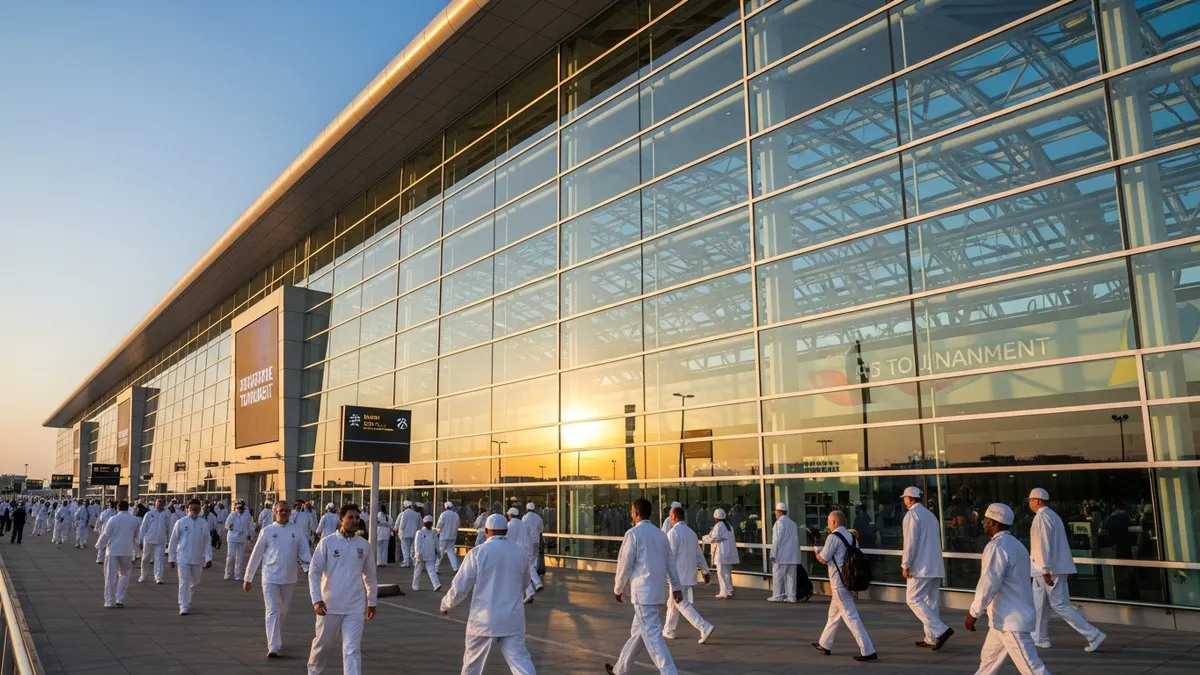
All 16 World Cup Venues
From the Opening Match in Mexico City to the Final in New Jersey, every World Cup 2026 stadium mapped and explained.
Your Complete Venue Guide
Sixteen stadiums, three countries, four time zones. The 2026 World Cup is the most geographically spread tournament in football history, stretching roughly 4,000 km from Vancouver in the northwest to Miami in the southeast and reaching as far south as Mexico City. New York New Jersey Stadium (commercially MetLife Stadium) hosts the Final on July 19, 2026, and Estadio Azteca in Mexico City kicks off the tournament on June 11, becoming the first venue ever to stage matches at three different World Cups (1970, 1986, and 2026).
The combined capacity across all 16 venues is 1,080,958 seats, the largest total in tournament history. Eleven cities are in the United States, three in Mexico, and two in Canada. The biggest knockout-round atmospheres will be at the New York / New Jersey venue (82,500), Dallas Stadium (80,000), and Los Angeles Stadium (70,240). If you are flying in from outside North America, the easiest US arrival airports for a multi-city trip are Newark (EWR), JFK, Miami (MIA), and Los Angeles (LAX), each within 60 minutes of one of the marquee venues.
Distances matter when you plan back-to-back matches. New York to Boston is a 4-hour Amtrak Acela ride. Toronto to New York is a 90-minute flight. Mexico City to Guadalajara takes 1 hour by air or 7 hours by ETN luxury bus. Cross-border legs (US-Canada or US-Mexico) take longer than the flight time suggests because immigration adds 60 to 90 minutes per crossing. Plan a buffer day when your fixtures span more than one country.
Use the interactive map below to see where each venue sits across North America. Filter by country to focus on a single region, or click any pin to jump to that stadium's full guide with transport directions, neighborhood hotel picks, match schedule, and matchday tips.
The Tournament Trail
Click any stadium to explore. Filter by country. Trace the path from opener to final.
Loading venue map...
United States
11 stadiums hosting World Cup 2026

Seattle Stadium
Lumen Field · Seattle

San Francisco Bay Area Stadium
Levi's Stadium · San Francisco Bay Area

Los Angeles Stadium
SoFi Stadium · Los Angeles

Kansas City Stadium
GEHA Field at Arrowhead Stadium · Kansas City

Dallas Stadium
AT&T Stadium · Dallas

Houston Stadium
NRG Stadium · Houston

Atlanta Stadium
Mercedes-Benz Stadium · Atlanta

Miami Stadium
Hard Rock Stadium · Miami

Philadelphia Stadium
Lincoln Financial Field · Philadelphia

New York New Jersey Stadium
MetLife Stadium · New York / New Jersey

Boston Stadium
Gillette Stadium · Boston
Mexico
3 stadiums hosting World Cup 2026


Canada
2 stadiums hosting World Cup 2026


Frequently Asked Questions
How the 16 Cities Cluster
The 2026 World Cup is the first tournament where most fans cannot watch even a third of matches without flying between countries. The 16 host cities sprawl across more than 4,000 miles between Mexico City and Vancouver, and any realistic multi-match trip needs you to think in clusters rather than as one trip.
The four natural travel clusters
- Eastern US cluster (NY/NJ, Boston, Philadelphia, Miami, Atlanta):All within a 2-3 hour flight or a long-day Amtrak run. The Northeast Corridor (Boston → New York → Philadelphia → DC) is the only meaningful train route in the cluster; everything south of Philadelphia is a flight. Cheapest cluster for fans flying in from Europe.
- Central US cluster (Dallas, Houston, Kansas City, Atlanta): Short flights of 1-2 hours between all four. Driving Houston to Dallas is a 3.5 hour motorway run; Dallas to Kansas City is 7 hours. Most international fans book this cluster with Atlanta as the eastern bridge.
- Western US + Vancouver cluster (Los Angeles, San Francisco Bay Area, Seattle, Vancouver): A north-south corridor. LA to Vancouver is 3 hours by air; the Pacific Coast Amtrak run is scenic but 22+ hours. Vancouver specifically needs an extra hour at the border for customs even on the train.
- Mexico cluster (Mexico City, Guadalajara, Monterrey): Domestic flights of 1-1.5 hours. Mexico City is the hub; intercity buses (ETN, Primera Plus) are comfortable and 40-50% cheaper than flights if you have a 6-7 hour window to spare.
The hardest hops to schedule
The trips that catch fans out are Mexico City to anywhere in the US Pacific Northwest (8+ hours door-to-door with a connection), Toronto to anywhere in Mexico (10+ hours including layover), and Vancouver to anywhere in the eastern half of the US (8 hours minimum). If your team's group draw forces you across the US-Mexico-Canada triangle, build a full rest day between matches into your itinerary. Same-day stadium-to-stadium is doable but exhausting; same-day stadium-to-flight-to- stadium-the-next-evening is the limit of what is realistic.
Map-based planning tip
Use the map above to filter by country, then click into each stadium for the in-city transit guide. The cheapest multi-match trips in 2026 are the ones where two consecutive matches fall within the same cluster. If you have a choice between following one team through different clusters or following one cluster through different teams, the cluster-first strategy saves you roughly 40% on intra-North- America travel costs.
Keep Exploring
More ways to plan your World Cup 2026 trip


